Walking Alongside
A Volunteer’s Perspective by Karsten Skoglund-Andersen
It really is a gift to be invited. I was invited to come on this trip back in January [of 2026].
A very anxious time in my home town of Minneapolis, MN. ICE agents wreak havoc across our neighborhoods, snatching people we see and interact with everyday. On top of that, there was a great divide in opinion on the matters at hand that tainted relationships. I was invited out for drinks by Chris when he asked me to come on this trip.
I had never been to Europe and honestly the travel and flying part of the trip felt daunting. When we landed in Warsaw, I was so exhausted. Once we got through the airport we had to wait for Marcus to arrive by train from Berlin (Marcus had all of our hotel check in information). We sat in a busy park outside the central train station in Warsaw. I started falling asleep on the park bench as the city kept moving around us. Eventually, we decided to check out a shopping mall nearby and look for a place to get a cup of coffee. It was a Sunday so most of the shops were closed but we did find a spot for a drink. That’s where we met Marcus. We could finally get to our hotel. Praise! We all settled our luggage and cleaned ourselves up before heading out to meet with a local pastor.
We met this pastor in the lobby of our hotel. He brought with two members of his youth group who were refugees of the war in Ukraine, a young man and a young woman. The young woman had an idea for dinner at a local food hall so we began walking there. The six of us made small talk along the way. Mostly about travel and first impressions of Warsaw. Honestly, I was so tired and feeling rather jaded at this point, I didn’t have much to say. We arrived at the food hall and began eyeing the different vendors and what food they had. Chris, Marcus, and I ordered our first of several East Asian meals while in Warsaw.
Once we sat down with our food, Marcus discussed with the pastor the vision and goal of Mending Together and Table of Hope in Poland. There was a nod of approval from all six of us when Marcus talked about the special feeling we all get when we are invited out for a meal. Especially in times of sorrow and hardship. The pastor shared some stories of his time as a youth pastor in Ukraine and Russia and time spent abroad as an evangelist. He told us how the church was looked at with intense scrutiny in the Soviet Union and how many people were brought to faith by books like The Chronicles of Narnia. Things with gospel messages, just subtle.
We were shown a children’s book accompanied by some songs that he has been working on with a similar subtle approach to sharing gospel themes and messages. Eventually, we turned to the young man and the young woman and asked them some questions about their experience as refugees in Poland. The young man was not eager to talk until we brought up football. The young woman, on the other hand, shared lots with us. My exhaustion from the day of travel took a backseat.
I felt propped up by a responsibility to hear her and listened closely as she shared her experience of leaving Ukraine and integrating into Polish culture. She spoke bravely and with solemnity but I could sense a deep sadness behind the Eastern European reservedness. She told stories of trying to visit home again. Having to pass through military checkpoints and hearing drones swarm by, seeing the destruction left behind by the war. She also shared about her faith going through changes, as well. She told us that her parents are skeptical of the strength she has found through her faith in Jesus; how her parents believed that faith was finite and there was not enough grace to go around to us all. Loaves and fishes came to mind at this moment. Marcus mentioned that it is godly to be angry at atrocities.
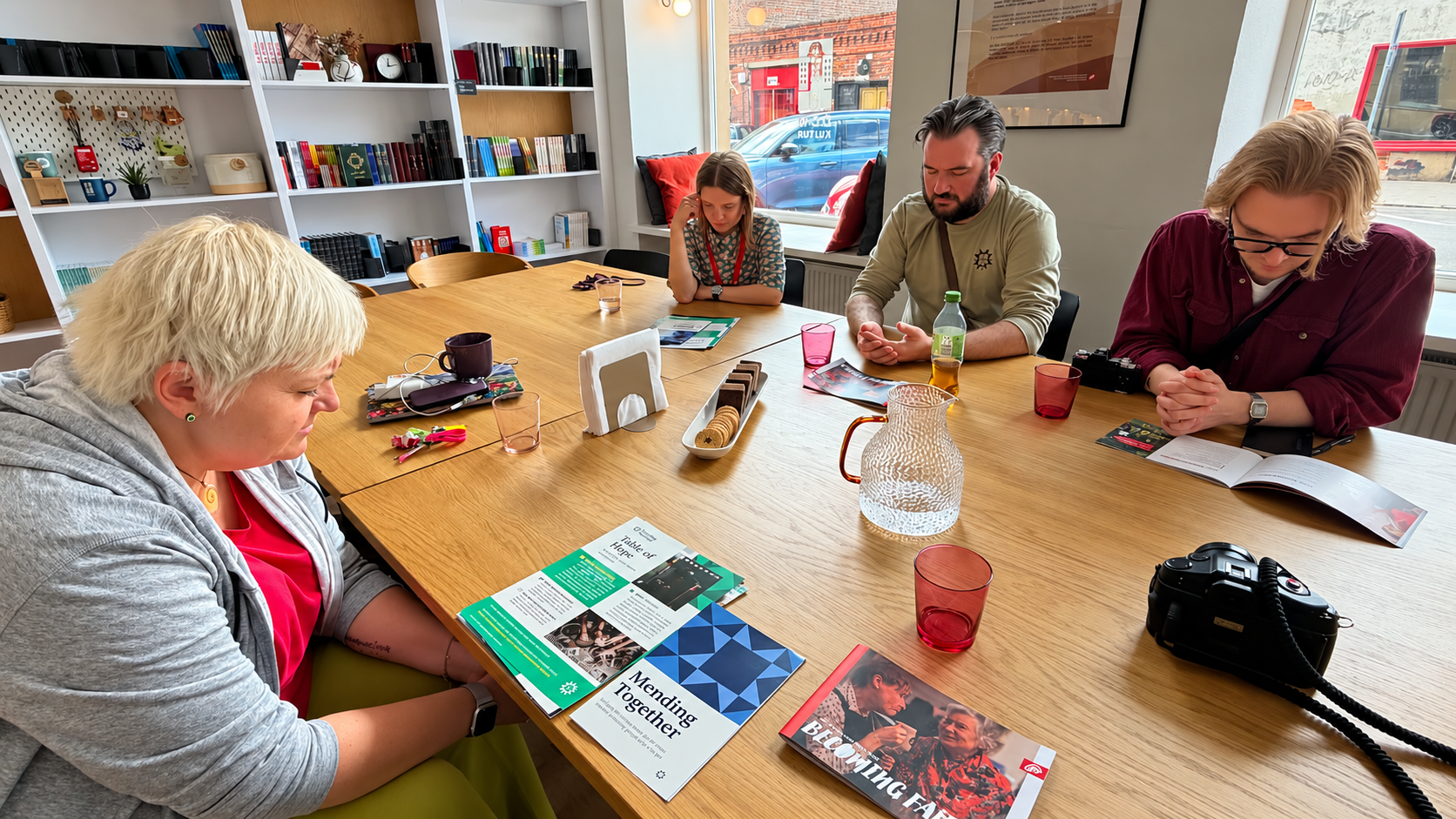
This was the first of a handful of meals we shared with people directly working through their own traumas, and the traumas of others. We were told by several people that this [Eastern Europe] is not the culture for therapy or vulnerability, but we saw things differently at the table. In Warsaw and Wroclaw we hosted people who were coming off of busy days at work, made time for their families, and often were hosting refugees in their own homes semi-permanently.
Many of these people were running short on bandwidth to serve each other as they dealt with their day to day lives on top of the trauma. But we heard everyone open up and saw everyone leave with a sense of community and acceptance.